
Technology
Proven hardware from Shenzhen, engineered for the Gulf.
China makes most of the world's charging equipment and runs the largest network on it. We choose from that ecosystem and adapt every hub to Gulf heat, dust and grids.
Hardware
The right charger for each site.
Sized for dwell time, grid capacity and where the market is heading.
Hotels, offices and homes, where cars stay for hours.
- Connector
- Type 2
- Use
- 1–6 hour stays
- Feature
- Load sharing
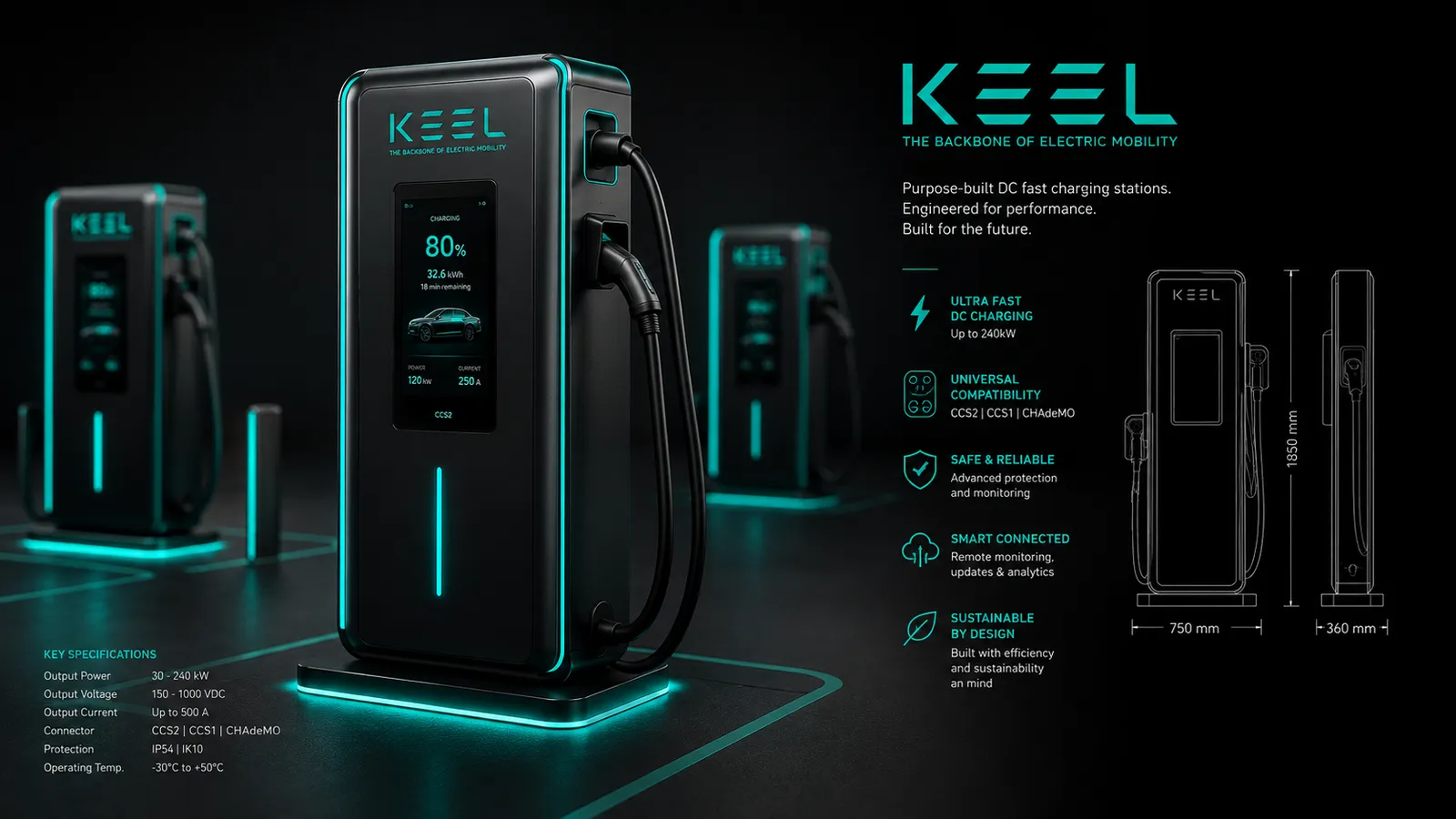
The core of city and highway hubs, with two connectors per charger.
- Connector
- CCS2 (+CHAdeMO)
- Voltage
- 150–1000 VDC
- Current
- ≤ 500 A
Liquid-cooled split systems for highway hubs, ready for megawatt upgrades.
- Connector
- CCS2 / MCS-ready
- Cooling
- Liquid-cooled cable
- Use
- Highways, trucks
Built for heat
Designed for a 50°C afternoon.
Chargers that cope in Europe can slow down or trip in a Gulf summer. We specify for the worst day, not the average.
Full output in heat
We ask every supplier for the derating curve and pick equipment that holds its rated power in high heat.
Cooling that copes
Liquid-cooled cables at high current, filtered air paths, and canopies over chargers and screens.
Sealed against dust
IP54 or better, IK10 impact rating, and more frequent filter changes in dusty months.
From Shenzhen
Checked on the factory floor, not from a brochure.
Our founder works between Dubai and Shenzhen and has visited more than 100 factories across China's EV and energy industry. That's how we choose suppliers.
- Export spec, not domestic. China's own network uses GB/T connectors. We buy CCS2 export equipment built to IEC standards.
- Factory checks. Production line, power-module source, accredited test reports and export references.
- Software that talks. OCPP tested with our management platform before shipping, so remote control works from day one.
- Spares close by. Critical parts stocked in the region and local crews trained on the equipment.
Operations
Built to stay working.
Remote monitoring
Every charger reports its status. Many faults are fixed remotely before a driver notices.
Smart power
Dynamic load management shares grid capacity across chargers within the site's limit.
Storage where needed
Batteries buffer high-power charging where the grid is limited, with solar where the roof allows.
Technology or grid partner?
Manufacturers, software platforms, utilities and contractors: let's talk.